AI Has Outgrown Your Management Team

In conversation
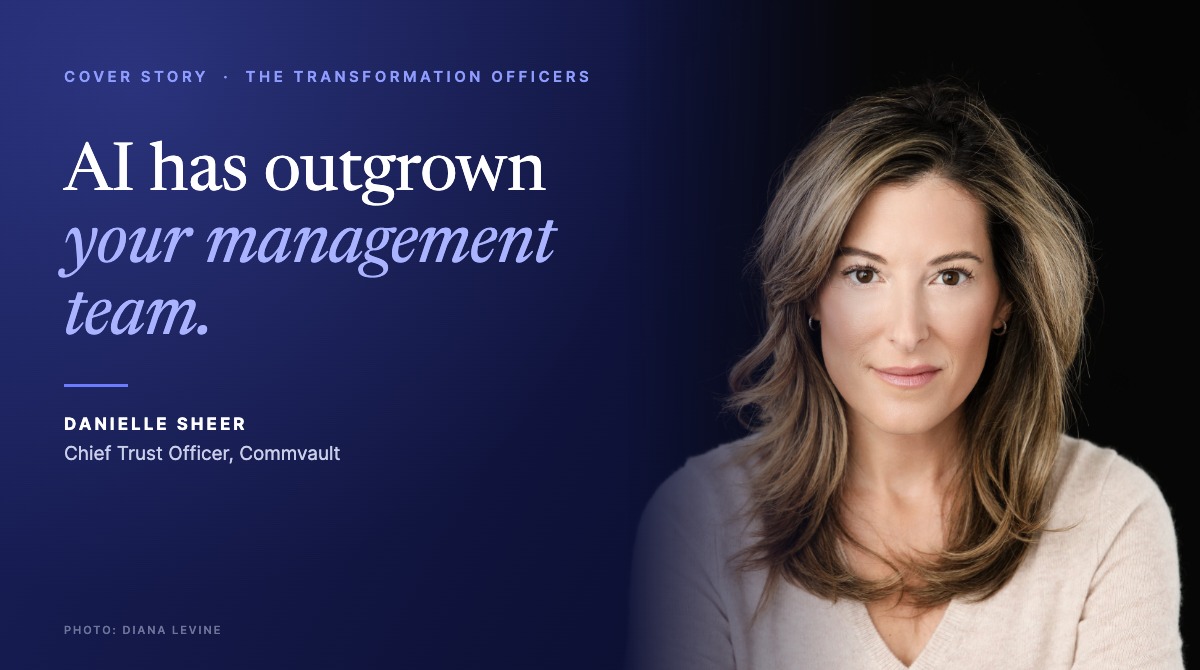
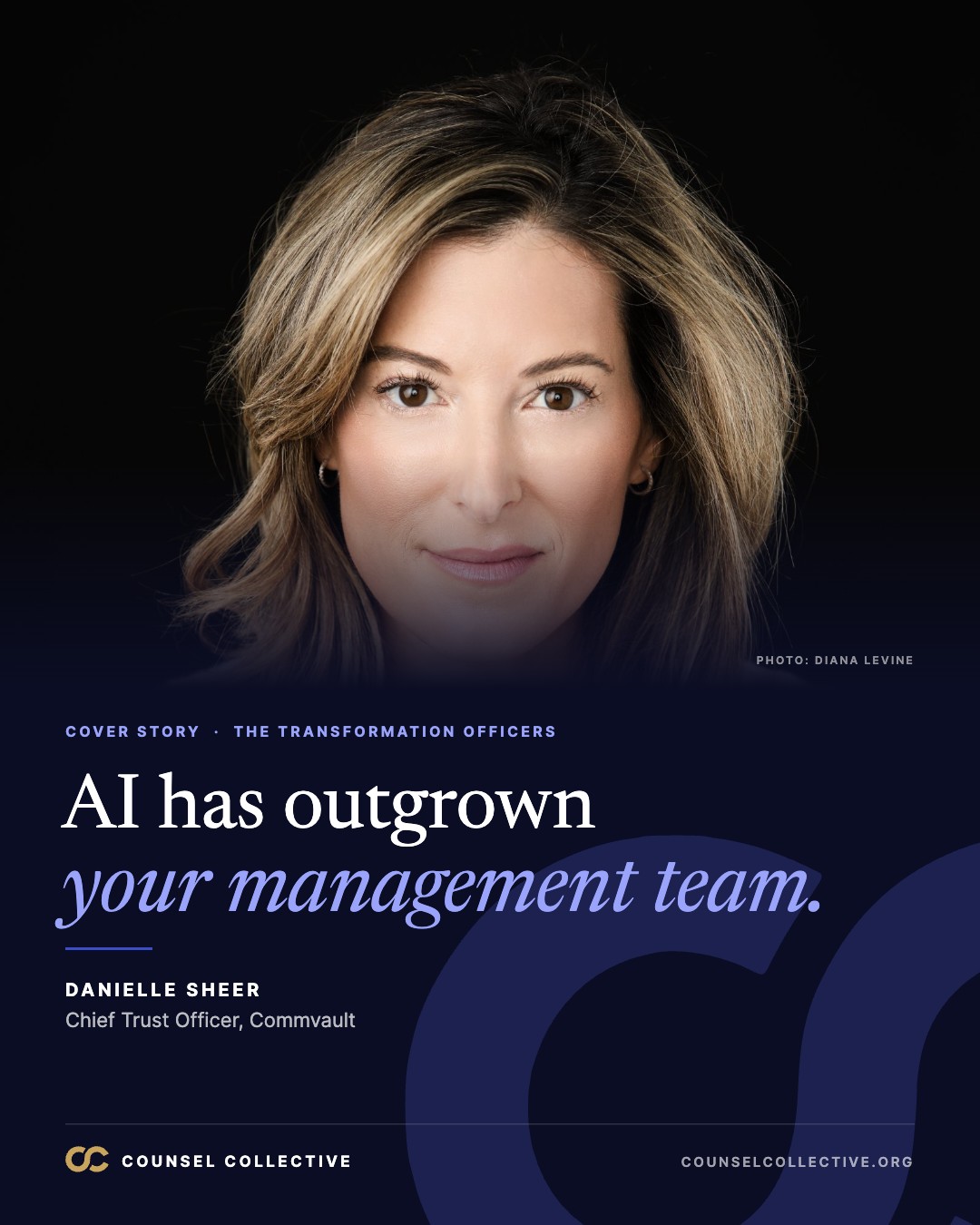
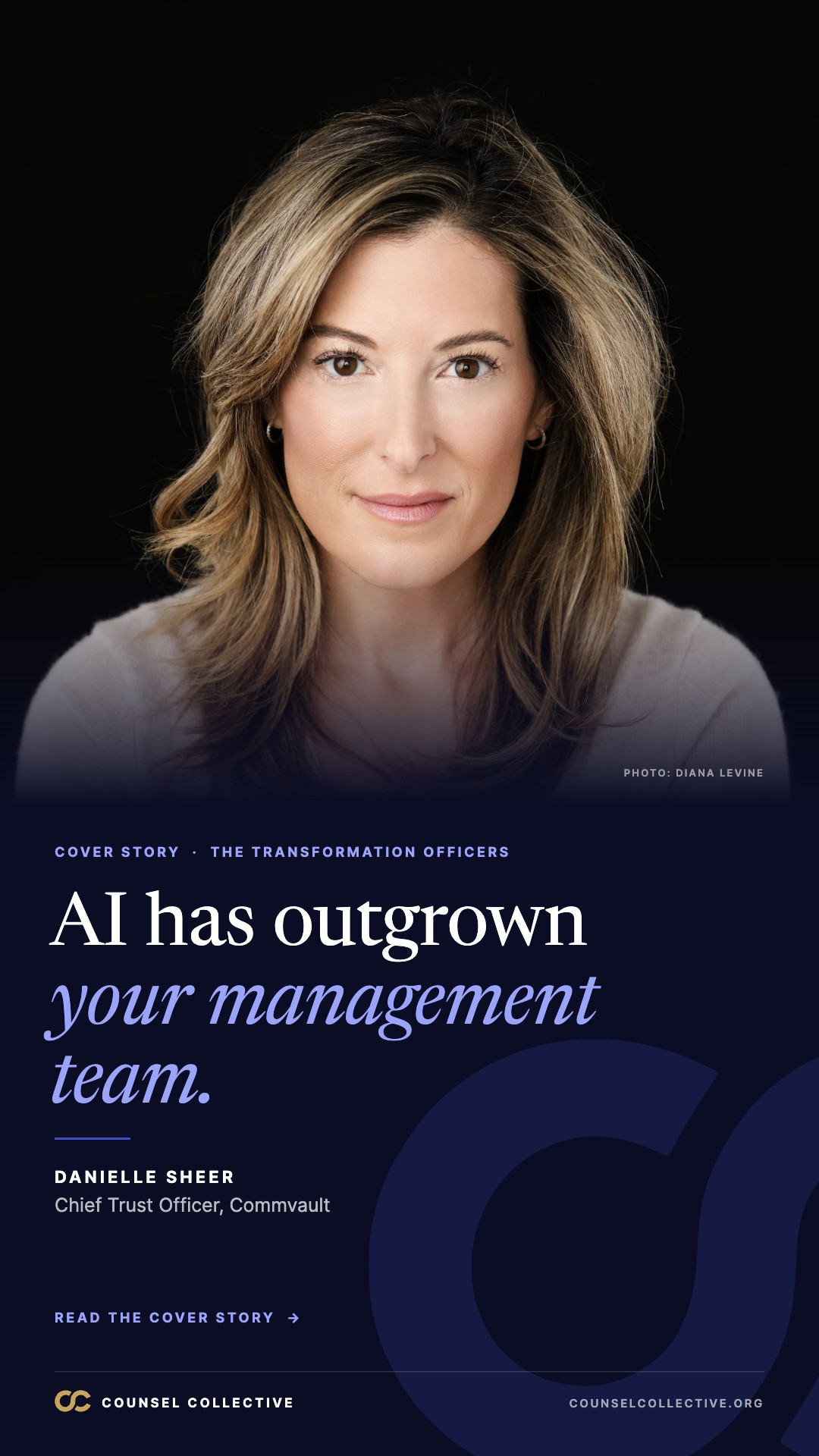
AI has outgrownyour management team.
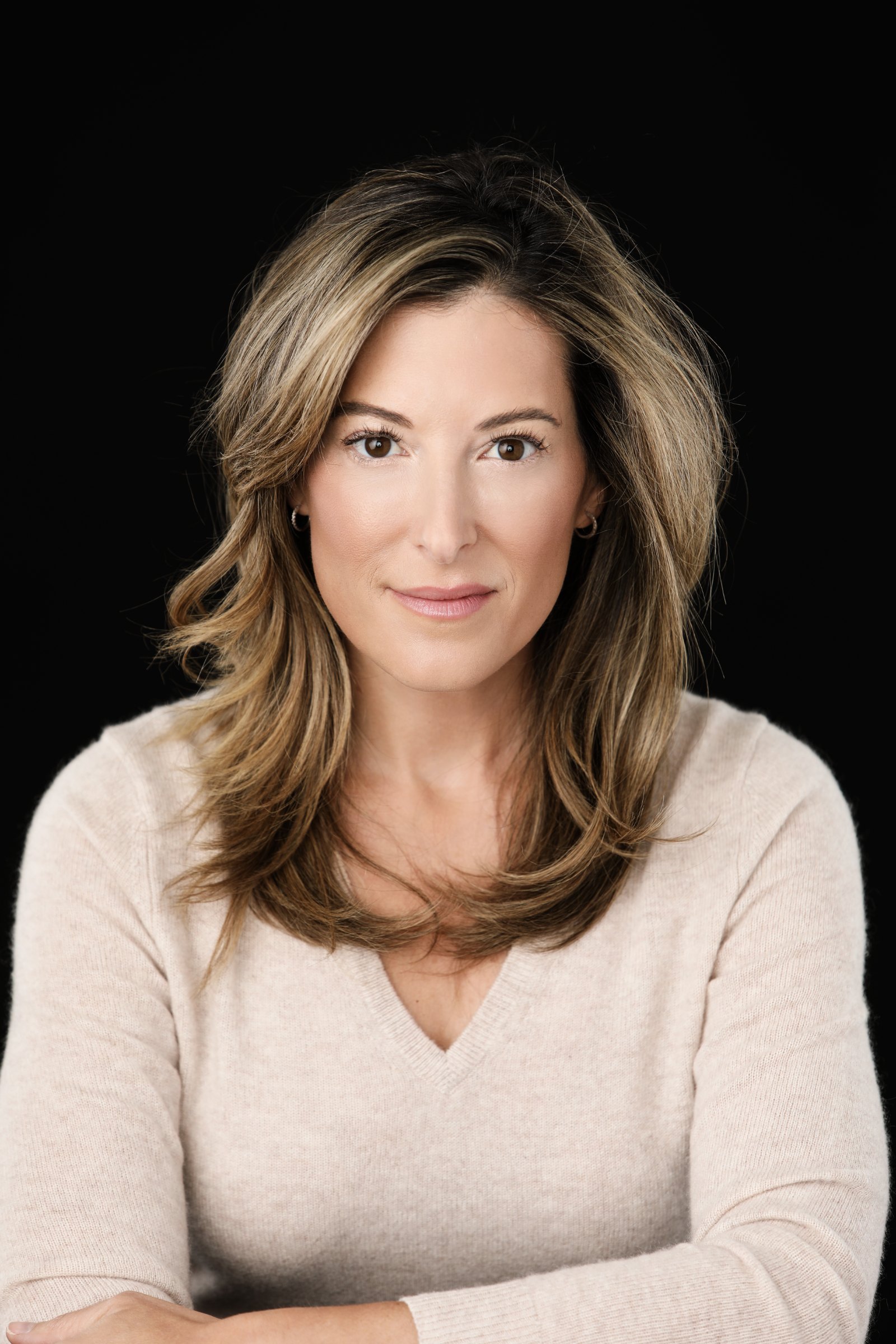
Danielle Sheer argues that companies should stop organizing leaders around yesterday’s functions and start building teams around tomorrow’s enterprise outcomes.
Danielle Sheer
Chief Trust Officer, Commvault
Trusted partnersfassforwardJoele FrankKirkland & EllisCommvaultInspiredTidal PartnersSkaddenBreachRx
one progression
in her remit
trust
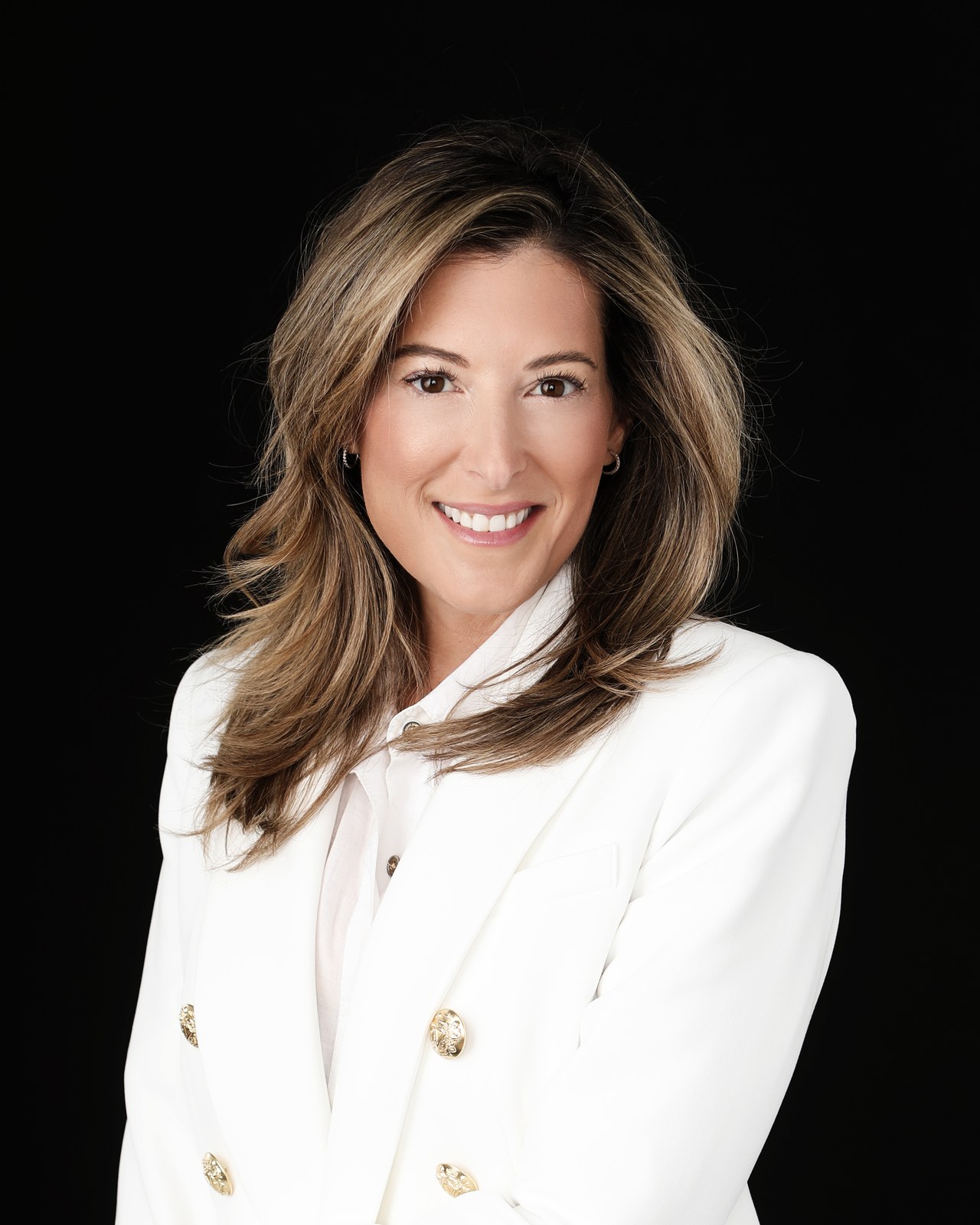 Danielle SheerChief Trust Officer, Commvault
The through line
It is to integrate the leadership.
Trusted partners
The partners behind the remit.
The organizations Commvault relies on across the functions Danielle Sheer leads, named by her. Select one to learn more.
fassforward
The How CompanyThe How Company: a leadership development and storytelling consultancy that helps executives and their teams change how they work, one story at a time.
Danielle Sheer is a smart, savvy business leader and Commvault’s Chief Trust Officer. She joined the company in 2021 as CEO Sanjay Mirchandani was reshaping his leadership team. In our five years together, I’ve helped Danielle turn her independent thinking and creativity into a broader Trust organization spanning acquisitions, partnerships, and cybersecurity. Our fassforward team has worked with key leaders in her organization to expand their influence and impact on the business. This article captures her next challenge: pairing AI with sound judgment to change how work gets done and deliver faster, better results for the business and customers.Rose Fass, Founder & Chair, fassforward
Joele Frank
A strategic and financial communications firm that advises companies and their boards through M&A, shareholder activism, crises and the other moments when every word counts.
Kirkland & Ellis
A global law firm known for its M&A, private equity and capital markets work, advising companies and their boards on the transactions that reshape them.
Commvault
The cyber resilience and data protection company where Danielle Sheer serves as Chief Trust Officer, with a remit spanning legal, security, compliance and governance.
“The point is not to collapse the expertise. It is to integrate the leadership.”Danielle Sheer, in this story
BreachRx
An AI-accelerated cyber incident response platform that brings security, legal, operations and executive teams into one governed workflow when an incident hits.
Tidal Partners
A Palo Alto M&A advisory boutique founded in 2022 by Centerview alumni, advising technology companies and their boards on their most consequential transactions.
Inspired
by Somerset DevelopmentThe developer and placemaker behind Bell Works, building workplaces designed around how people actually gather, work and think.
While working with Danielle on the acquisition of Commvault’s former headquarters in Tinton Falls, New Jersey, what stood out was her ability to see beyond the transaction itself and recognize the opportunity ahead. Our vision for Bell Works Fort Monmouth was to transform a private corporate campus into a vibrant, mixed-use destination where businesses and the broader community could come together. Danielle understood our ‘Metroburb’ model and played an important role in helping us bring that vision to life while ensuring Commvault could continue to call the building home. Her strategic thinking, collaborative approach, and ability to navigate a complex transaction made her an invaluable partner.Ralph Zucker, President and CEO, Inspired by Somerset Development
Skadden
Skadden, Arps, Slate, Meagher & Flom: a global law firm whose cybersecurity and data privacy practice advises boards and general counsel on incident response, investigations and cyber governance.
For most of modern corporate history, management was built around a scarce resource: information.
Information moved up. Managers gathered it, interpreted it and reconciled competing views at the top. Functions built expertise, workflows and reporting lines around that motion. Seniority often meant seeing more of the picture.
AI breaks that architecture. There is no gate-keeping of information. Machines can now aggregate, synthesize and analyze more information faster than any management hierarchy can move it. As agentic AI begins to act as well as advise, the mismatch will become more consequential: decisions that once traveled through reporting lines may be executed at machine speed.
That does not make leadership less important. It makes the human work of leadership more valuable: deciding what matters, resolving competing interests and enabling people with different expertise to move together.
Yet many companies are still organizing management for the world AI is replacing. They preserve functional silos until a transaction, cyberattack or other crisis makes collaboration unavoidable. When the enterprise most needs a team, it discovers that it has only assembled a group.
Danielle Sheer thinks companies should design for that pressure before it arrives. As Chief Trust Officer of Commvault, she leads functions spanning corporate governance, cybersecurity, business development, mergers and acquisitions and post-merger integration, government and public affairs, compliance, legal and intellectual property. Most companies scatter that work across several functional executive leaders where Commvault has organized it around a shared outcome: trust.
One shared outcome
The functions she leads at Commvault, as the piece lists them.
Act I
The Trust Test

Trust is what remains after the system has been tested.
Danielle Sheer · Chief Trust Officer, CommvaultPhoto: CommvaultSheer began recognizing the limits of the traditional model in August 2011, when Carbonite took its IPO roadshow into a collapsing market. “The week of Carbonite’s roadshow and eventual pricing, the market fell dramatically,” she recalls. “Several companies were lined up to go public, and only two of us ultimately made it.”
She was the company’s general counsel. The team satisfied the disclosure requirements, built the right governance structure and perfected the documents. “Compliance can make you eligible for trust,” Sheer says. “It cannot make you trusted.”
The question investors, employees, customers and the board were really asking: “Do I trust these people with what comes next?”
Trust changes behavior. It shapes whether people buy, renew, partner, invest, share information or extend grace when something goes wrong. “Once trust affects behavior, it affects economics,” she says. “And once it affects economics, management should be willing to design it.”
“Compliance can make you eligible for trust. It cannot make you trusted.”
At Commvault, where customers entrust the company with critical data and workloads, that is not theory. As Sheer has experienced firsthand, cyberattacks test far more than security controls. Customers watch how and when the company communicates, whether the team shows up reliably and what choices they make. “Every company should expect to face a cyberattack,” she says. “What matters is how you respond in the moment and whether your transparency, reliability and judgment strengthen trust under pressure.”
The same discipline shaped Commvault’s response to the AI boom. As technology companies raced to rebuild their messaging around artificial intelligence in the spring of 2025, the easy move was to say something, anything, as loudly as everyone else. Commvault’s Trust leaders started with a different question: What do our customers actually need from us right now?
They chose a deliberate position: remain in the conversation without allowing market enthusiasm to outrun customer need. “Restraint can feel a lot like falling behind when an entire industry is moving in one direction,” Sheer says. “Trust doesn’t require you to be quiet, conservative or slow. It requires you to be deliberate about whose interests are represented when you decide what to say and do.”
Trust is what remains after the system has been tested. It is also what turns a group of specialists into a team while the test is underway.
Act II
Stay With the Problem
Sheer saw the same pattern across three companies: Legal would answer the question presented to it, but the underlying business problem would persist across the rest of the organization.
“I personally wanted to stay with the problem,” she says. Legal could answer, “Can we do this?” But the legal answer rarely resolved the broader questions: “Should we, and what will happen if we do?” Sheer wanted to remain engaged until the enterprise, not merely the legal function, had an answer.
Staying with the problem
The legal question
“Can we do this?”
Legal could answer this oneThe broader questions
“Should we, and what will happen if we do?”
For much of her career, doing so depended on influence rather than scope. She had to earn the invitation. At times, the general counsel’s presence was misread as a warning: Are we in trouble? Do we have to watch what we say?
That dynamic can distort the advice itself. “The traditional structure can perversely encourage legal advisors to dress business judgment in legal language simply to earn permission to participate,” Sheer says. She refuses to do that and expects the same of her legal advisors.
At Bottomline Technologies, the company’s take-private by Thoma Bravo showed Sheer the value of cross-functional leadership under intense time pressure. Each function brought a distinct and essential perspective to the transaction, while success depended on connecting those perspectives into a coherent enterprise view. “An organizational chart defines areas of responsibility, but it cannot capture how interdependent those responsibilities become in a consequential moment,” she says. “What mattered was that leaders shared information early, challenged one another candidly and made decisions with the success of the enterprise as their common objective.”
Sheer describes the progression in her own career as “from legal advice, to enterprise judgment, to organizational architecture.” In practice, that meant moving from answering Legal’s portion of a question to designing how several functions would answer it together. At Commvault, she had the chance to turn that progression into a management model.
Three companies, one progression
Carbonite
The IPO
“Compliance can make you eligible for trust. It cannot make you trusted.”
Bottomline
The take-private
“An organizational chart defines areas of responsibility, but it cannot capture how interdependent those responsibilities become in a consequential moment.”
Commvault
Organizing around outcomes
“What enterprise outcome are we trying to produce, and what leadership structure gives the CISO the greatest ability to produce it?”
Act III
Organize Around Outcomes
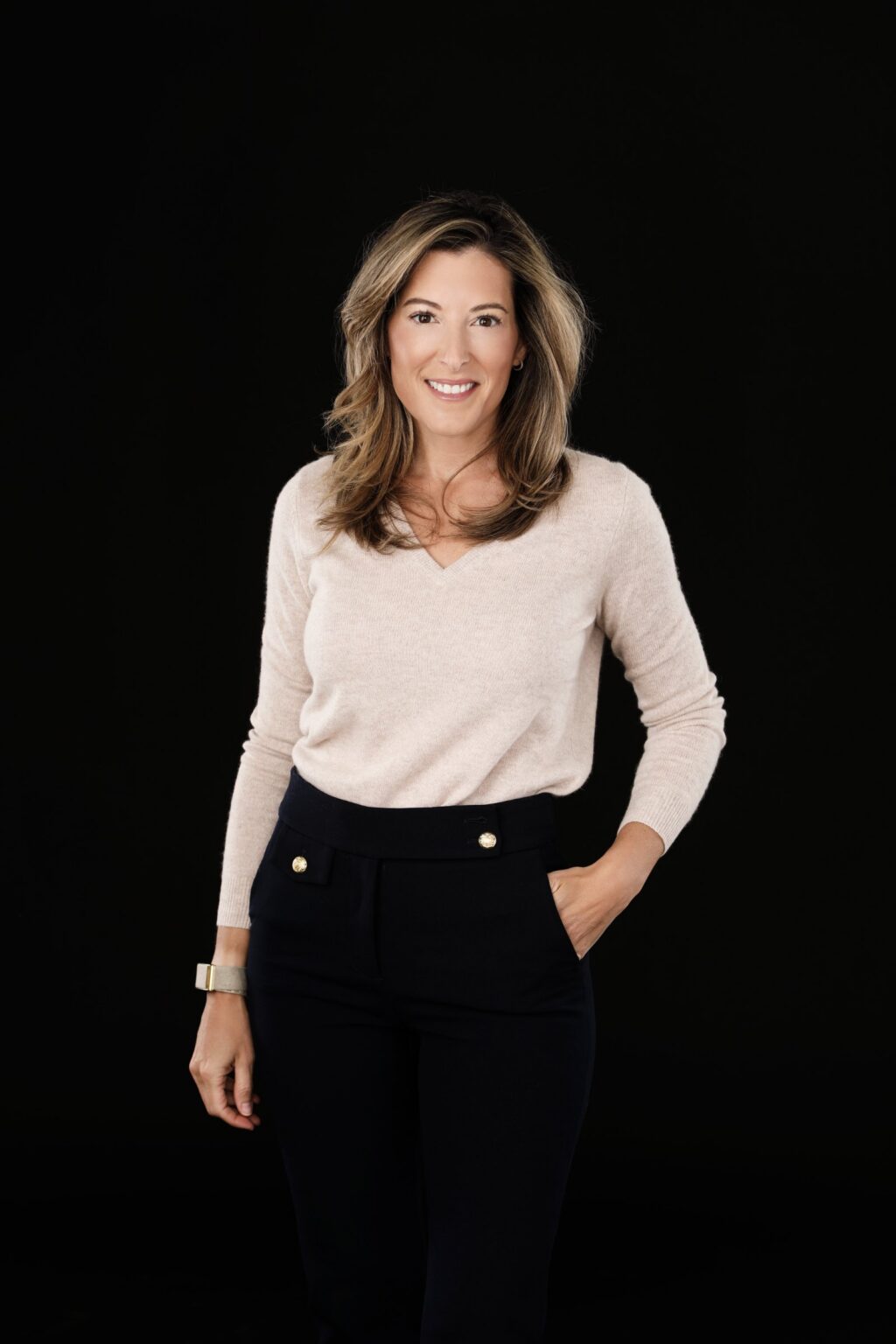
Commvault hired Sheer at the end of 2021 to lead legal, compliance and intellectual property.
Photo: Diana LevineCommvault hired Sheer at the end of 2021 to lead legal, compliance and intellectual property, with an understanding that the role could grow. The pivotal assignment was modernizing cybersecurity. It placed her in the middle of one of corporate design’s longest-running debates: where should the chief information security officer report: to the CEO, CIO, CFO or someone else?
Sheer started with a different question entirely. “What enterprise outcome are we trying to produce, and what leadership structure gives the CISO the greatest ability to produce it?”
Cybersecurity is a technology issue, but it is also a customer, enterprise-risk, regulatory, governance and growth issue. The same is true of data governance, cyber regulation, critical infrastructure and national security. These problems do not respect the lines companies drew between departments decades ago. With AI raising the stakes across all of them, Commvault has emerged as a leader in outcome-driven organizational design, building its leadership structure around the results the enterprise needs rather than the reporting lines it inherited.
An acquisition makes the flaw easy to see. Corporate Development tests the strategic rationale. Cybersecurity examines the vulnerabilities. Legal evaluates obligations and exposure. Privacy assesses the data. Public Affairs considers the policy landscape. Each sees a different part of the same transaction, and disagreement travels up before a decision can travel across. The executive team becomes a mediation layer. Sheer found herself asking, “How many times does that need to play out before we redesign the system?”
Commvault tries to reverse that flow. The specialists work through tensions together before they escalate them. Sheer is accountable for the system, not every decision. “My job is not to referee every disagreement,” she says. “It is to create the relationships and shared objectives that allow them to resolve disagreements with each other.”
Two ways to settle a disagreement
The traditional model
Disagreement travels up before a decision can travel across.
At Commvault
The specialists work through tensions together before they escalate them.
The model does not require specialists to agree instinctively. It requires them to resolve tensions before presenting the business with an enterprise position, so Engineering, Marketing and Sales receive an enterprise position rather than a series of competing functional views.
The model also redefines effective leadership. “AI can move information,” Sheer says. “Leadership has to create the conditions for people to act on it together.”
Act IV
Integrate Leadership Without Weakening Expertise

The integrating leader must be comfortable coaching disciplines they do not personally practice.
Photo: Diana LevineThe obvious objection is that an expanded remit may concentrate too much decision-making authority, compromise necessary independence and create dangerous dependence on one unusually capable executive. Sheer takes that objection seriously. “If the model is ‘take several important functions and give it to one leader,’ that’s not organizational design,” she says. “That’s key-person risk.”
The answer is not to turn the Chief Trust Officer into a second CISO, general counsel or head of corporate development. “If you’re doing that, you’ve weakened all roles,” Sheer says. Each specialist needs real authority. Legal must retain its professional independence and access to the board. Cybersecurity must remain led by cybersecurity experts. The job is to make great specialists more impactful by connecting them to the board, customers, regulators, legal risk, policy and business strategy, and by giving them a team of peers who understand that their success is interconnected. “The point is not to collapse the expertise,” Sheer says. “It is to integrate the leadership.”
“Being part of a cross-functional Trust team has expanded both my mandate and my influence,” says Bill O’Connell, Commvault’s Chief Security Officer, who joined the company in 2025. “Any CISO can ask Legal, Public Affairs or Business Development for input. What is different here is that their leaders are my peers on the same team. We set priorities together, resolve competing considerations before they slow the business down and keep customer and partner outcomes at the center of our decisions. When I advise Sales and Marketing on how to engage CISOs, I am not carrying a security recommendation that still has to make its way through the organization. I am bringing a position our leadership team has already tested, aligned around and is prepared to support.”
“If the model is ‘take several important functions and give it to one leader,’ that’s not organizational design. That’s key-person risk.”
The integrating leader must be comfortable coaching disciplines they do not personally practice. That creates a career opportunity as well as an organizational one. General counsels can grow into enterprise leaders without reframing every question as legal, while making room for the next generation to assume real responsibility for the legal function. Broader enterprise leadership and stronger succession reinforce one another.
The path is not reserved for lawyers; Sheer just happens to come from that discipline. Leaders can come from cybersecurity, finance, policy or technology. The relevant question is whether they can translate across disciplines, give strong specialists authority and turn distinct areas of expertise into coherent enterprise judgment at the speed technology demands.
Act V
Redesign Before the Crisis
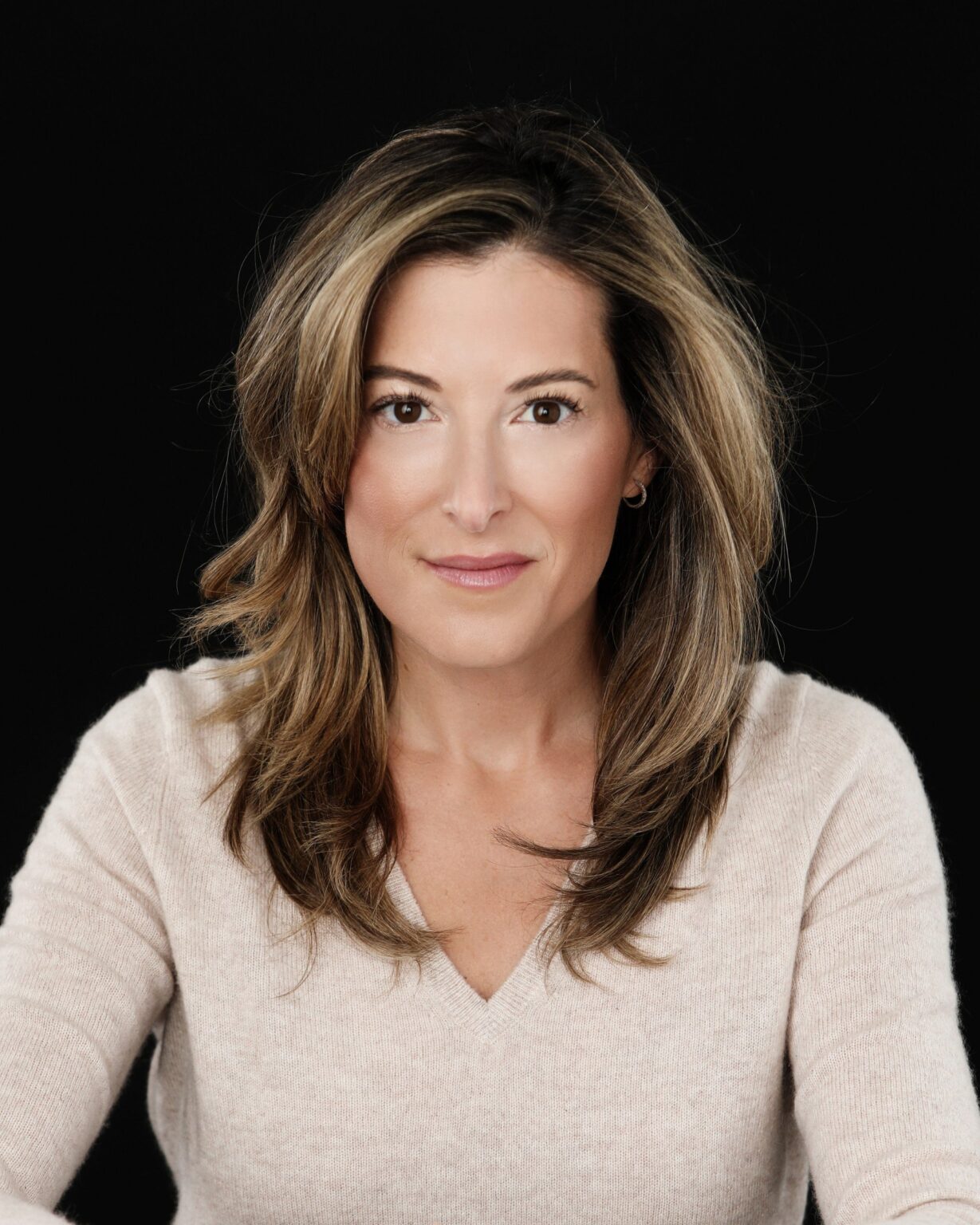
Leadership becomes less about moving information upward and more about designing how judgment moves across the enterprise.
Photo: Diana LevineAI makes the need more urgent. As AI gains agency, the governance question moves from what a model can know to what a machine is allowed to do. Machine-speed action requires controls and leadership that can operate across cybersecurity, technology, law, governance and enterprise risk without waiting for separate reporting lines to converge.
For O’Connell, that shift is already an operational reality. “An AI agent can act on borrowed permission in milliseconds,” he says. “If deciding whether it should have that permission requires security, legal and the business to escalate separately, the decision arrives after the action. Those boundaries have to be set together, in advance.”
In that world, senior leaders lose value as human information routers and gain value as architects of judgment, aided by their unique experiences: establishing boundaries, making consequences legible and creating the conditions for specialists to act together. The scarce capability is no longer access to information. It is the ability to make meaning from it and move people around it.
The Chief Trust Officer presents one possible model. It offers an early vision of leadership organized not only around what each function does, but around what the enterprise must produce together: growth, resilience, innovation or trust.
CEOs and boards should examine that architecture before the next cyberattack, acquisition or AI-driven disruption. Which silos still serve a purpose? Which exists only because they have always existed? Which outcomes matter to everyone but belong to no one? Which leaders can connect specialists without weakening their respective autonomy? Where must the company build durable working relationships before the stakes are highest?
AI has outgrown the information constraints that shaped the traditional management team. As machines increasingly aggregate, analyze and act, leadership becomes less about moving information upward and more about designing how judgment moves across the enterprise.
Companies can redesign that model now or wait until pressure exposes its limits. Those that act early will enter the next high-stakes moment with an integrated team already in place. The rest may discover, with the clock running, that they have leaders but not yet a team.
“AI can move information.
Leadership has to create the conditions for people to act on it together.”
Danielle Sheer on LinkedIn · The Transformation Officers · Cover story
Take the story with you
Pass it to your leadership team.
Seven cards for LinkedIn, and a carousel you can post in one go. Or send the story to the person who should read it before the next reorg.
The Transformation Officers
Leaders who are redrawing how the enterprise works, in their own words. Know one? Put them forward. Read the series.