
Juan Longoria: Courage Before Confidence
Juan Longoria, Vice President of Customer Care at Enseo, on the site that went from last to first, the call center job he thought was temporary, and why he tells new leaders how the path actually works.
In his own words, with voices from people who have worked with him
The operation ranked last among the company’s global sites when Juan Longoria arrived. He had moved his family overseas to take on a role he had never held before, knowing there was a lot to learn and even more to improve.
He does not try to make the transition sound easier than it was. “I had never done that specific role before, and I was scared.”
The performance numbers made the challenge clear, but he believed the metrics were only part of the story. He began looking at what kept people from speaking up, asking for help and solving problems together.
“People were hiding what they did not know to protect their reputations, so mistakes stayed buried and nobody fixed the thing underneath.”
Rather than treating every missed target as an individual failure, he focused on creating an environment where employees could acknowledge what they did not know and get the support to improve.
“We made it safe to say ‘I do not know this yet,’ and we fixed the gaps together.”
Within twelve months, the site had moved from last to first in the company’s global rankings.
For him, the turnaround reinforced a lesson he carried into later leadership roles. “That changed how others saw me, but more importantly it proved to me that trust gets better results than pressure.”
The version that did not exist
He recognized that reluctance to speak up because he had experienced it early in his own leadership career.
He started on the phones and remembers what it felt like to enter leadership meetings for the first time, surrounded by colleagues who seemed to know exactly where they belonged.
“Everyone around the table seemed to speak a language I had not learned yet, and their paths looked planned. Mine did not.”
At first, listening felt safer than contributing. Over time, he realized that waiting to feel completely qualified could keep him from sharing a perspective the room needed.
“Nobody was going to hand me that feeling.”
His frontline experience eventually became a source of confidence. “So I started asking questions, then offering what I saw from the floor, because that was the one thing in the room nobody knew better than me.”
He now sees how much time he lost trying to appear more certain than he felt.
“The most expensive stretch of my career was the time I spent protecting a version of myself that did not exist — time I could have spent learning from the people around me.”
What the title does not show
A vice president title tells only a small part of his story. His path included seasonal fieldwork with his family, years behind a bar, a call center job he never expected to become a career and an education completed one class at a time.
“They don’t see a kid from San Benito working the fields in Michigan with his family every summer. They don’t see the years I bartended without a real plan, or the ‘short-term’ call center job I took to help cover tuition. They don’t see the degrees earned one class at a time, or moving my family across the world for a role I had never done before.”
What connects those experiences, he says, is not hardship for its own sake, but the decision to keep moving when he was unsure of himself.
“Mostly they don’t see how many times I was scared and went anyway. Every good thing in my life is on the other side of a moment I didn’t feel ready for.”
Much of that outlook came from his parents. His father led by example. “My dad never lectured me. I just watched him give every task and every person his full effort.” He still carries a lesson from watching him: “if you’re going to do something, learn to do it well, then make it easier for the next person to follow.”
His mother built a small business and reinforced the importance of education. She “reminded me that if I didn’t take school seriously, the fields would be waiting.”
He also credits people who recognized his potential and gave him opportunities along the way. “Along the way, people gave me a chance before I had earned it. I try to be that person for someone else now.”
The placeholder
He says he often recognizes the same uncertainty in people starting their careers.
He remembers a promising frontline representative who described the job as something temporary, a way to get by until a different opportunity came along.
“I recognized it instantly, because I took the same job for the same reason. I thought I was passing through. That headset turned into a career I never would have pictured, and the only reason I noticed was that someone stopped and told me what they saw in how I worked.”
He shared what he saw in the employee’s work and explained why frontline service deserves to be taken seriously.
“The person on the other end of that call is having a hard day, and he is the entire company to them in that moment. Whether they are treated well or not is up to him. That is not a small job. That is one of the few jobs where you can change how somebody’s day goes before lunch.”
He challenged the representative to approach the next ninety days as an opportunity to build a skill, not simply fill time. He followed up, gave him meaningful responsibility and recommended him when a lead position opened.
He treats the underlying point as a standing obligation rather than a nice thing he did once. “The work is real, and the people doing it are closer to the customer than anyone else in the building. I try to say that out loud as often as I can, because I needed to hear it once and did not get it for a while.”
Luck is not a plan
As he progressed in his career, he began thinking more deliberately about how other people could find their own path into leadership.
When people asked how he advanced, he noticed how often his answer depended on someone else opening a door.
“I noticed my honest answer was ‘someone took a chance on me.’ That is not a plan anyone can follow. It is luck.”
That bothered him enough to change how he operates. If the only reproducible instruction he could offer was be fortunate, then the path was invisible, and invisible paths get walked by whoever happens to stumble onto them. So he started narrating. “What the roles really require, how decisions get made, and what I wish someone had told me sooner.”
He is especially mindful of the unwritten expectations that can leave first-generation professionals at a disadvantage.
“I learned that doing great work quietly is not the same as being seen. Decision-makers cannot advocate for what they do not know about, so you have to connect your work to what they care about, in plain language.”
And the reframe that makes the hardest part doable: “asking for an opportunity is not bragging. It is giving someone the information they need to say yes.”
In practice, that means making time for early-career professionals, explaining how decisions get made, being open about his own mistakes and advocating for people when they are not in the room. He has also co-chaired Latino employee resource groups, “because community makes the climb feel less lonely.”
What steadiness costs
Another lesson came from leading teams through difficult moments. He learned that his response to pressure often shaped how everyone else responded.
“When things got hard, people did not need me to have every answer. They watched how I reacted. If I panicked, they panicked. If I stayed calm, told the truth, and focused on the next step, they could too.”
Which produced a job description he did not expect to be given. “I realized my job was not just to hit the number. It was to be the person who stays steady long enough for everyone else to think clearly.”
The people who have watched
The people who have worked alongside him describe that approach in personal terms.
Pedro Villagran, Senior Director at Kelly Services, was a direct report before he was a peer. “What has always stood out to me is that Juan doesn’t lead through title. He leads through consistency, integrity, and the way he shows up for people.” He is specific about the mechanism. “Juan brings confidence without ego, holds himself accountable, and genuinely invests in the people around him.”
Villagran sees his own career as an example of that impact. “Juan’s impact can be seen in the number of leaders he has developed throughout his career, and I can speak to that personally because I am one of them.” For Villagran, that influence extends beyond their time working together. “His influence extends far beyond his own accomplishments. It lives on through the many leaders he has helped develop who are now leading and developing others themselves.”
Aviana Hernandez worked for him at T-Mobile and is now a senior manager in customer care operations at Frontier Airlines. “Juan has been one of those rare leaders who sees something in you before you fully see it in yourself. As a Latina building my career in corporate America, his mentorship has given me confidence to lead with authenticity, embrace my voice, and understand that my experiences and perspective are strengths, not things I need to leave at the door. I’ve watched Juan turn his own journey into a commitment to lifting others, and I’m grateful to be one of the leaders he continues to encourage, challenge, and inspire.”
Jennifer Garza, who co-founded Uncommon Operations with him, highlights his community involvement and collaborative approach. “He is intentional with his time and dedicates it to projects that will benefit his local community along with the broader Latino community.” She adds: “He made us a strong team that grew off each other’s strengths rather than learning to avoid each other’s weaknesses.”
Garza has since started a small bloom bar business of her own, which she describes as “another path to use as an example for the upcoming generation of RGV entrepreneurs.”
Eric Molina, a two-time world heavyweight title challenger and Assistant Director of Parks and Recreation for the City of Edinburg, is a longtime friend. “I’ve had the blessing of knowing Juan since our early twenties, and watching his journey through the years has been something truly special. To witness his growth not only in success, but as a father, a leader, and most importantly, as a man, is something I genuinely admire. Life has a way of testing us through many rounds, and seeing the man he’s become is a testament to his character, heart, and perseverance. I’m proud of him.”
In Harlingen, he chairs the board of Valley International Airport. Tony Nevarez, the airport’s CEO, works with him there. “Juan is a natural leader. He adapts quickly and steps up without hesitation when it matters. He sees things from angles most people overlook, and that perspective makes everyone around him better. Above all, he’s a dedicated family man, and that same care shows up in how he leads.”
Norma Sepulveda, Mayor of Harlingen, has watched him in that role. “Juan is someone I have come to trust because I’ve seen the thought he puts into his decisions. He listens carefully, considers different viewpoints, and stays focused on what will best serve the organization. I respect his willingness to stand behind his convictions and step forward into leadership. He is early in his term as chair of our Airport Board, but he is already making a positive difference.”
Forward
He recently stepped into the vice president role at Enseo, and he is starting the way he says any good leader should. “By listening before I change anything.”
Alongside it he is building something personal called Built, Not Born, a home for what twenty years of leading people has taught him. He describes the purpose in operational terms rather than inspirational ones. “It puts a method in plain language so leaders don’t have to choose between hitting their numbers and taking care of their people. I never believed those were in conflict, and I want more leaders to see that it’s buildable.”
Adelante means forward, and his version of forward is a defense of the human part of a function that is being automated around the edges. “Technology is what people see. How they are treated when it matters most is what they remember.” He hopes to build teams that balance high expectations with respect for people and to show emerging leaders, “especially ones who look like me, that the room is open.”
“You can’t be what you can’t see.”
When asked how his early experiences continue to shape him, he returns to the uncertainty he felt in those first leadership meetings.
“I still remember sitting in rooms hoping nobody would ask me something I could not answer, and everything I do as a leader now is an attempt to make sure the person sitting across from me never has to feel that alone.”
Today, that journey continues at Enseo. He sees the opportunity to help build something meaningful: a customer care organization that becomes a benchmark for service, first in hospitality technology and ultimately beyond it. But he knows that reputation cannot be declared. It has to be earned through the experiences customers have and the way employees are supported every day. For someone who once sat in leadership meetings afraid to ask the wrong question, there is something fitting about building a team where people are encouraged to speak up, take ownership, and grow into what comes next.
His advice to people waiting until they feel ready reflects the same lesson:
“Confidence rarely shows up first. Courage does. You move first, while your hands are still shaky, and confidence catches up once you have proven to yourself that you can.”
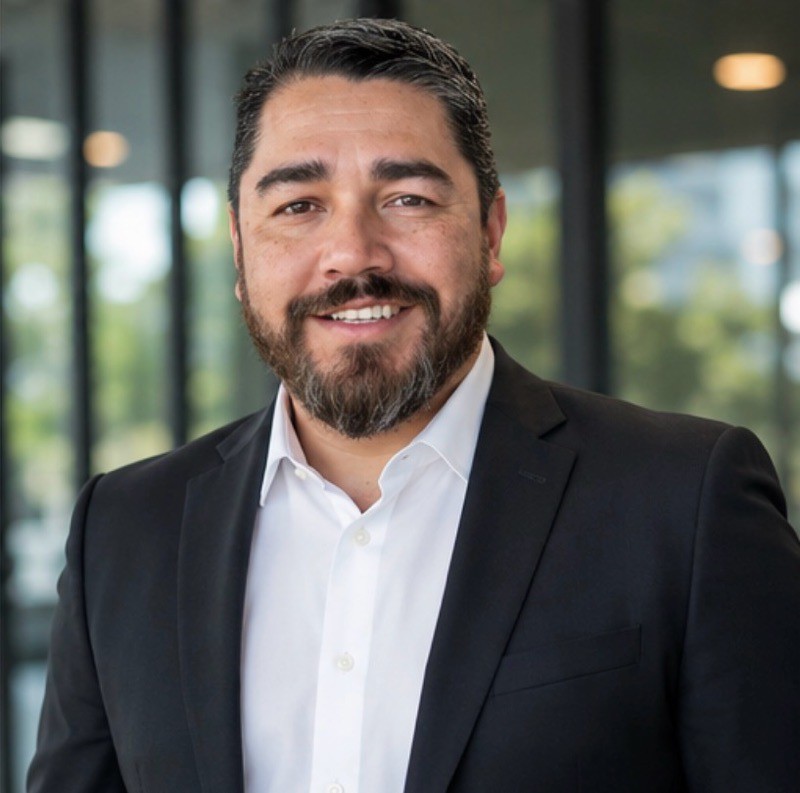
Juan Longoria is Vice President of Customer Care at Enseo. He chairs the board of Valley International Airport in Harlingen, co-founded Uncommon Operations, and is building Built, Not Born. He is from San Benito, Texas, and was recognized in Counsel Collective’s Adelante series in October 2026.
Juan Longoria took part in this feature in his personal capacity.