


Ed Bancroft was promoted into a role no one had held before him. There was no predecessor to shadow and no binder of standard practice, so he had to decide what the job was, and then keep deciding.
One hour Ed Bancroft is deep in a conversation about security enhancements. The next he is interviewing a prospective cafe operator, or sitting across from city officials. “One moment I could be discussing Security enhancements and the next I could be interviewing possible Cafe operators or meeting with City officials,” he says. The range is not a complaint. In fact, it is a big part of why he enjoys his role. It is the closest thing the job has to a definition. When your title is Chief Campus Officer, as he puts it, “one could argue everything falls under the category of ‘Campus-related.’”
That was the puzzle Bancroft was handed when he was promoted into a role that had not existed before him. There was no predecessor to shadow, no binder of standard practice, no settled answer to the first question any new leader asks: what, exactly, is the job. He had to decide that himself, and then keep deciding it.
Bancroft had spent years inside the organization before the title did, moving through a range of roles more or less on purpose. His working philosophy, he says, was “to avoid saying ‘no’ as much as possible in the professional environment.” Say yes often enough and the assignments stack up, but so do the skills. He still repeats a line an old supervisor once gave him: “Do the job you want to be promoted into.” Then he adds the wrinkle that defines his current seat. “This is true even if the role you want to be promoted into doesn’t yet exist.”
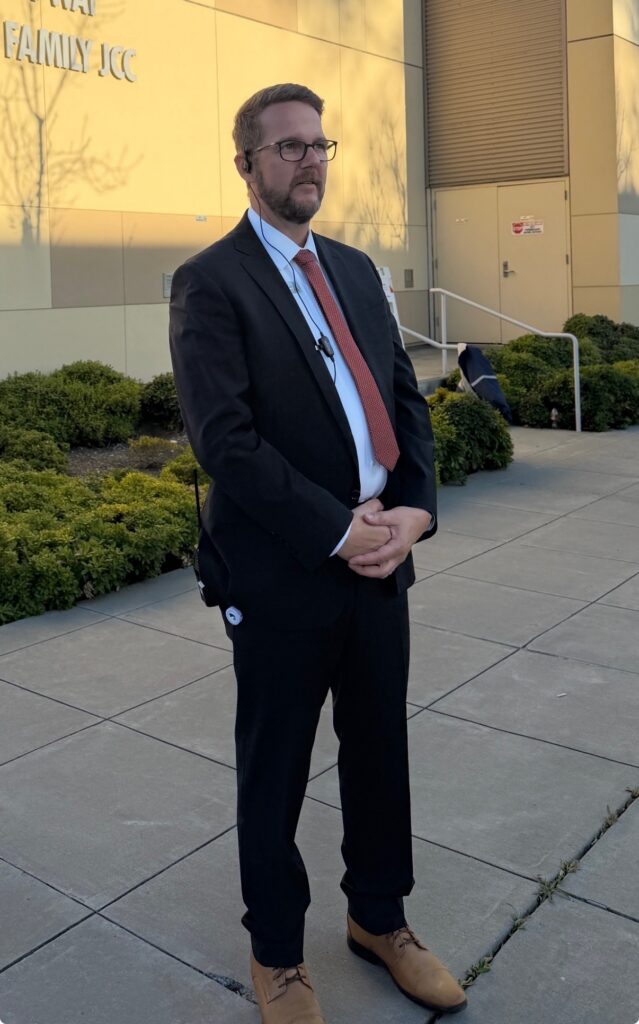
When the promotion came, he did not leave a hole behind him. He already had a succession plan in place for his old post and moved his assistant director up to fill it. He also took on two departments new to his purview, each led by a long-serving director. Within a year, one had retired and the other had moved to be closer to his son’s college. Losing two experienced leaders that close together was hard on the organization. Bancroft used the transition to build the next team, hiring directors who shared his vision for the departments and updating their scope and policy.
With everything potentially “Campus-related,” the danger was plain. A title that means everything can quickly come to mean nothing. Bancroft’s answer was to set a horizon. “For me it was important to define high-level goals in the short and long-term so I could compare progress toward these goals against newly assigned responsibilities,” he says. The goals became a filter, telling him when to push back on a new assignment and when to take it on. He built a prioritization matrix for the same reason, a way to keep the long arc in view while, as he puts it, “short-term distractions relentlessly require attention.”
He is deliberate about how rarely he says no. His instinct runs the other way, toward customer service: tell people what you can do, not what you can’t. “I am not the type of person who points to a job description and says, ‘That’s not my job,’” he says. The point is to keep the door open, then figure out what fits behind it.
The early work was as much about people as policy. Bancroft understood that his first real task was change management across his direct and indirect reports, whose previous supervisor had run things differently. He was not trying to change everything on day one. He just knew his style would land as a shift, and that steering that shift was the job before the job.

The campus itself has changed under him as technology reshaped what a building demands. He has cut utility consumption with a new building management system and automated controls. He led the move to mobile tokens for access, a project with more layers than it shows from the outside: choosing a product that would work with the existing security hardware and software, beta testing it, building the communications around it, and finally rolling it out to the full membership and participant population. The tools change what the campus can do. What they do not change, in his telling, is who the work is for.
Ask Bancroft what he would tell the next person stepping into a role no one has held before, and the answer skips past org charts and scope documents. “Embrace the unknown and commit to further defining the role every day,” he says. “Be patient with yourself and over time you will identify efficiencies that will enable foresight and free up time for strategic planning and prioritization.” Then he lands on the part he means most, the part that sits under the access systems and the cafe interviews and the meetings with the city: “Above all, don’t forget your Team are the crucial component to your success and that requires regular attention and intention.”