
In Conversation · Leaders to Watch
From Locker Roomto Boardroom
He sat on both sides of the table. A conversation about what in-house experience buys you in private practice, and the relationship economy of gaming law.
A Counsel Collective Feature · 2026
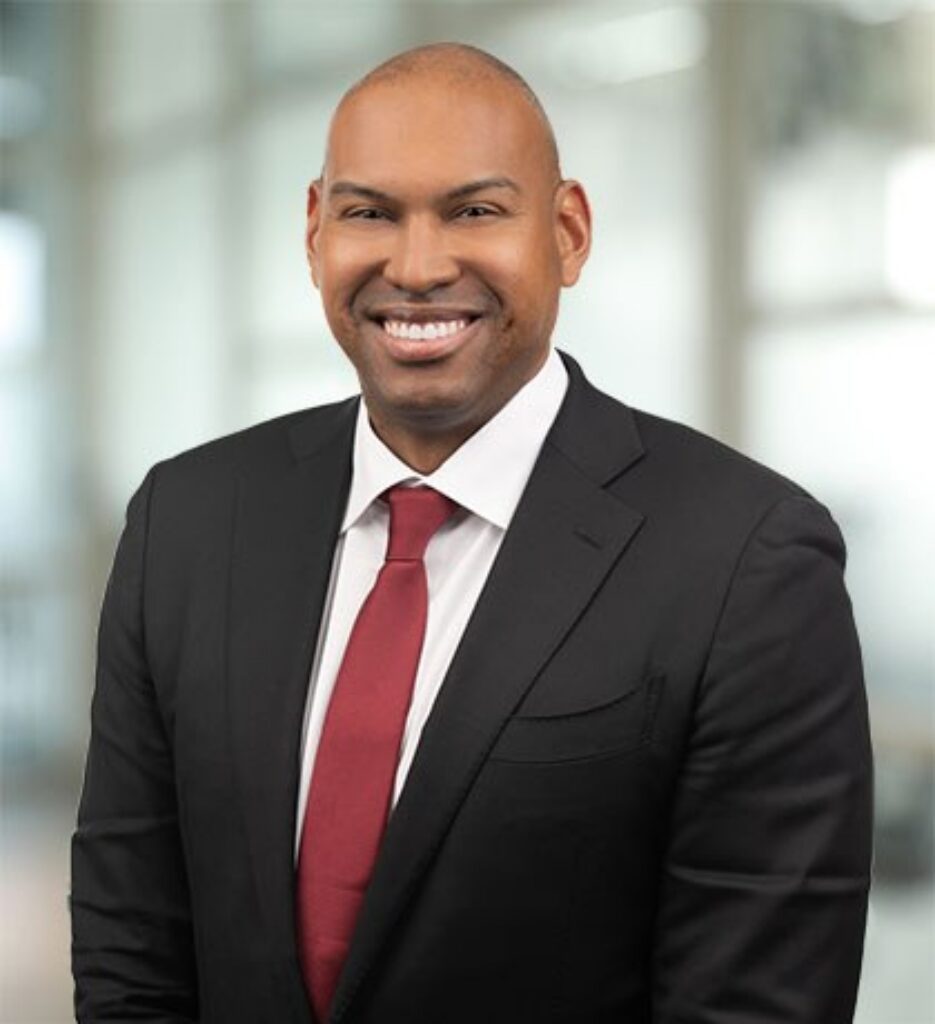
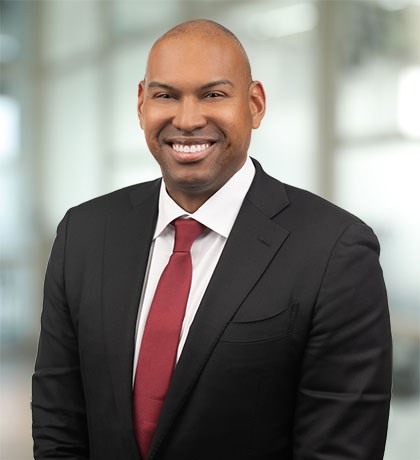
Kieron Frazier went to law school because he wanted to run a sports team. He never got there by the route he first imagined, and he has not given up on it. What he built instead is rarer than the job he was chasing.
“I still want to run a sports team. I haven’t given up on that dream,” he says. The turn came in 2018. “When PASPA fell in 2018 and sports betting was legalized on a state-by-state basis, I began to fully embrace the legal path I am on today.” Building a practice in gaming regulatory and compliance kept him close to the thing that drove him. “It allowed me to remain closely connected to sports and entertainment, even as I continue pursuing that broader long-term aspiration.”
What In-House Experience Actually Buys You in Private Practice
The credential underneath that practice is the part most attorneys in his space cannot claim. Frazier spent years in-house at an NFL franchise before he ever sat on the law firm side. He has been the client. He knows what the work looks like from the seat that receives the bill, and he is direct about what outside counsel tend to miss.
“Law firm counsel are often very good at telling you what you cannot do, sometimes before exploring what can be done,” he says. “I understand that the true value of an in-house lawyer is different. It lies in finding a path to yes while still remaining fully compliant with the law.”
That distinction is the whole argument for why his seat is unusual. The path he took, from in-house back into private practice and on to partner, is one very few make. “I can only name a handful of attorneys who started their careers in-house, moved into private practice, and ultimately matriculated to partner,” he says. He is candid about why, and about what it has cost. “Big law is inherently political. It’s not always about the quality of work product alone. It’s about who you know within the firm and whether they’re willing to spend their political capital to support your success.”
He had ignored recruiters for years. When the right opening finally came, what made it different was what it protected and what it offered. “This opportunity kept me in the gaming space within a well-established and high-regarded practice group,” he says. “It also allowed me to remain in Chicago, a place I truly call home. Most importantly, to offer partnership and the chance to build and lead my own team over time. That was an offer that I couldn’t refuse. The opportunity to finally be the head coach.”
The opportunity to finally be the head coach.
The Relationship Economy of Sports and Gaming Law
What he is doing now is converting fifteen-plus years of relationships into a book of business. The community he came up in is small and close-knit, and that fact shapes everything about how he operates. “Leaving on good terms is always the goal, because in this profession you will almost certainly work with someone from your past again,” he says. “If you’re perceived as a non-team player, people are far less inclined to welcome you onto their team. The community is small and reputations carry weight. Law is a service industry. You may need to rely on former colleagues for guidance, collaboration, or support in the future. You cannot afford to ignore the key players in the industry.”
His client base today is specific: casino operators, sports betting operators, and private equity firms moving into gaming. He sees the next chapter widening from there. “I see my practice continuing to advise new investors, particularly private equity firms, as they enter and expand within the gaming marketplace,” he says. “I also see my practice evolving to tap into the broader sports and entertainment sector, specifically the NIL landscape, representing student-athletes and universities as that space continues to develop.”
The way he wins that business is not a campaign. It is presence. For the better part of two months he has been traveling nearly every week to meet people in person. The willingness, he says, comes from his upbringing: “I’m not afraid to get on a plane. It’s not a hard lift to get on a plane.” The theory behind it traces back to a football field. “When I played football at the University of Illinois, the program was in a period of rebuilding. Our head coach, Ron Turner, often told us, keep showing up. That message stayed with me. Another saying that has always resonated is, you just can’t beat the person who never gives up. I don’t quit. I never have, and I never will. Showing up consistently, and making sure my clients know I am available, engaged, and ready to provide the legal services they need, is fundamental to my success. That commitment is also what separates me from the rest of the competition.”
You just can’t beat the person who never gives up.
He is clear-eyed about how trust actually moves in his industry. Cold outreach without a referral lands far less often than outreach that comes with a name. To him that is not a trick but the rule. “This reinforces how relationship-driven the industry truly is. Very few people are willing to work with someone unless that person has been vouched for by someone they trust, myself included. Trust is foundational. Without it, providing legal services effectively becomes significantly more difficult. Strong relationships and credibility are not just helpful in this industry. They are essential.”
That puts him in delicate territory, because much of his pipeline runs through people he genuinely likes. His rule for protecting both the friendship and the work is simple. “You preserve the friendship by either doing excellent work yourself or by bringing in a trusted colleague who can deliver excellent work for the client.” The relationship survives the transaction only if the work is good enough to deserve it.
Ask him what he is actually building and the answer is not a quarter or a title. It is something with a longer horizon. “I am building a book of business to support both myself and the firm,” he says. “I am building my own business and legacy within the firm’s platform, with the intention of creating something sustainable, something I can ultimately pass on to those who come behind me.”
Counsel Collective exists to elevate exactly this kind of perspective. A lawyer who has sat on both sides of the table, who treats a small industry as a long game rather than a series of deals, and who is betting that credibility built over fifteen years compounds into something durable. Kieron Frazier is not yet C-Suite Level executive he set out to be. He became something harder to replace: the in-house voice in a private practice room, the person who knows how to find the path to yes.
About
Kieron Frazier
Partner, Gaming · Fox Rothschild LLP
Kieron Frazier is a gaming partner at Fox Rothschild in Chicago. He spent years in-house with an NFL franchise before returning to private practice, and today advises casino operators, sports betting operators, and private equity firms entering the gaming market.