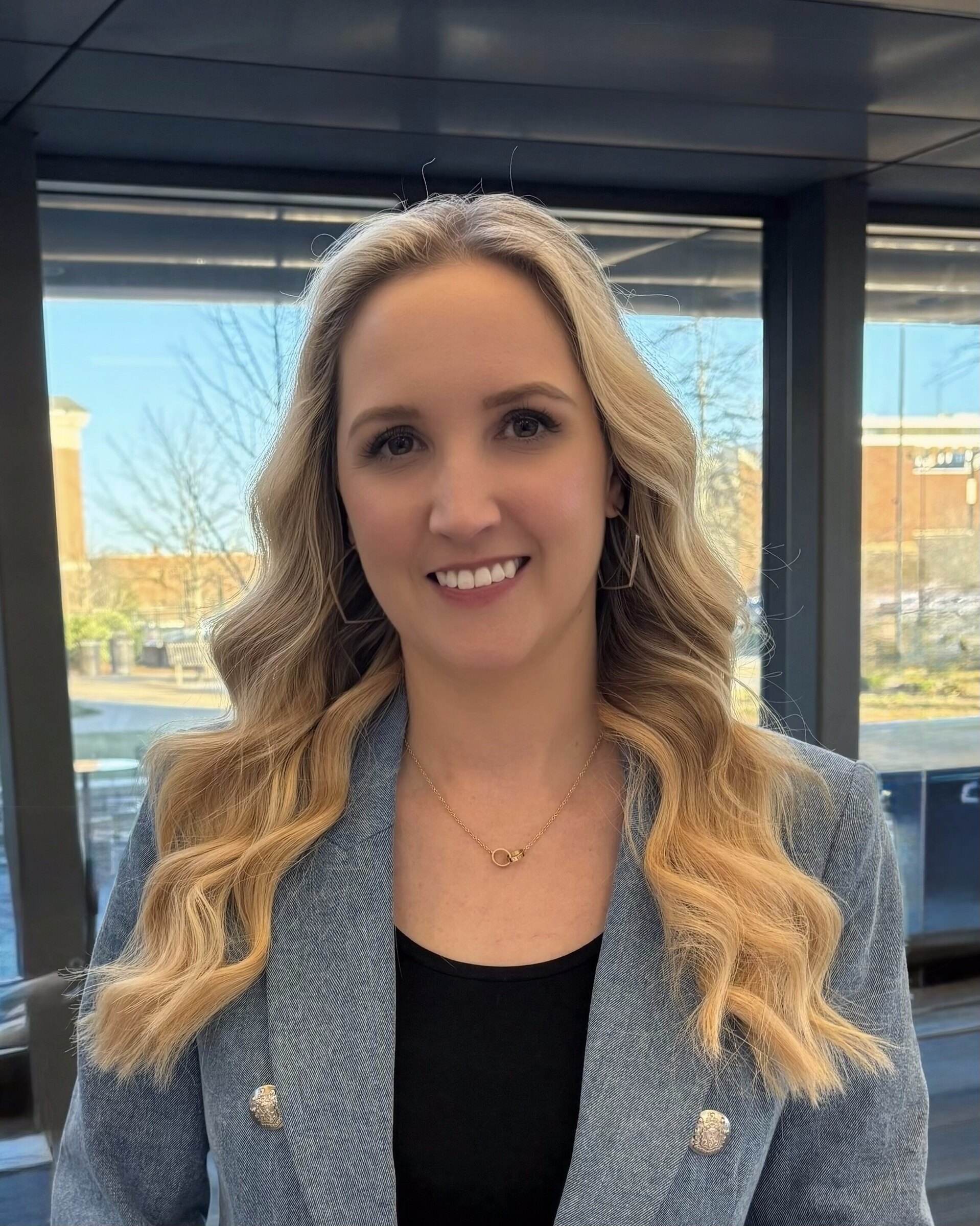
Catherine Budzynski founded Larimar Management around a philosophy that has guided every stage of her career: Legal creates the greatest value when it helps organizations make better business decisions. Whether advising founders through periods of rapid growth, helping first-time Chief Legal Officers build their legal function, or working with law firms, her focus is the same. Pair rigorous legal judgment with commercial perspective, remove friction, and help organizations “get to Yes.”
That philosophy is especially relevant for law firms. As client expectations evolve and artificial intelligence reshapes the economics of legal practice, technical excellence has become table stakes. The question is no longer whether outside counsel can produce excellent legal work. The question is what General Counsel and Chief Legal Officers actually need from the relationship, and how often the people on the other side of it are answering an entirely different question.
Catherine has lived on both sides of that relationship. She started her career in Big Law, then spent years hiring and managing outside counsel as an in-house executive and Chief Legal Officer. She has been the associate drafting the fifteen-page memo and she has been the client with only two minutes to read it. She has approved the invoice and asked herself whether the advice changed the outcome or simply documented the risk. Larimar Management was built to help close that gap at a time when expectations of both law firms and legal departments are evolving faster than ever.
Catherine’s path to that perspective was shaped by a series of deliberate bets on her own growth. She began in the capital markets group at Skadden, Arps, Slate, Meagher & Flom, advising on debt offerings, equity financings, IPOs, and other complex transactions alongside some of the country’s most exceptional transactional attorneys. It was an extraordinary training ground, but she found herself increasingly drawn to the business behind the transactions rather than the transactions themselves.
That instinct led her in-house to Aflac, a global Fortune 150 company operating in the heavily-regulated insurance industry. Rather than follow a traditional legal path, she built one. She started on the contracts team, led it, and then deliberately expanded beyond it into marketing, intellectual property, product development, ethics, governance, and ultimately serving as Assistant Corporate Secretary to the public company board. Every move was intentionally focused on building the breadth she believed a Chief Legal Officer should have.
The defining opportunity came when Aflac stood up a $250 million venture capital fund. The company offered her the role of deal counsel. She pitched something larger: Head of Legal and Corporate Secretary for the entire global ventures group. Reporting directly into the business rather than the legal department, she effectively served as general counsel for a portfolio of global subsidiaries and an incubated startup. It was legal leadership with direct business accountability. At the same time, she pursued an Executive MBA at Auburn University, sharpening the financial and strategic lens she already brought to her legal work. The experience also clarified what she wanted next. She wanted to help build a startup, not simply invest in one.
That decision led her to Ohmium, a global green hydrogen company, where she became its first Chief Legal Officer. Catherine built a nine-person global legal team from the ground up. For a stretch it was one of the few all-women legal teams in her industry. She helped close a $250 million Series C, the second-largest Series C financing worldwide at that time in 2023, that fueled the company’s expansion into Europe and the Middle East. Along the way, she was recognized nationally, including being named General Counsel of the Year by Women, Influence & Power in Law and receiving the Career Mastered Women’s Leadership in Action Award.
All of that experience has converged into a simple philosophy that now underpins Catherine’s work: Legal exists to help the business succeed, not simply to identify why it can’t. She believes the best legal teams move beyond the “Department of No” stereotype and operate through a “Get to Yes” mindset anchored in integrity and disciplined judgment.
It comes down to one principle: “If it’s not illegal, unethical, or immoral, we have to find a way to get to yes.”
That sounds simple, but it’s a profound shift for many lawyers. The question becomes how to do something responsibly, not whether it can be done at all. That shift changes how Legal is perceived throughout the organization. Lawyers are no longer measured solely by the risks they identify, but by the judgment they exercise, the practical solutions they develop, and whether the business moves with greater confidence because they are in the room.
For Catherine, that is the evolution of the modern legal profession. Technical expertise remains essential, but it is no longer enough. Legal leaders who create the greatest value are the ones who pair rigorous legal analysis with commercial judgment and a relentless focus on helping the business move forward.

That mindset changes how legal leaders prioritize their work. Catherine encourages every General Counsel and Chief Legal Officer to start with a practical question: Where are the pain points right now? Not, where is the legal complexity, but where is the friction? Where is the business getting stuck? Where are deals slowing down? Where are business partners waiting on Legal? Where is the legal team itself spending time on work that adds little strategic value?
For Catherine, those questions matter because Legal creates value by removing friction, not adding process.
She uses contracting as an example. Most in-house teams focus first on the most legally sophisticated agreements because those are the ones outside counsel was historically paid the most to handle. Catherine recommends a different approach. Start with the contracts that create the most unnecessary back-and-forth. The ones the business partners dread. The ones that take six rounds of revisions to close because the starting position is too extreme to land anywhere reasonable. Streamline those, make them shorter, make them more commercially reasonable. That leads to a faster sales cycle, happier business partners, and a legal team spending its time where judgment matters most.
Those are the kinds of improvements executives notice because they help the business move. That perspective also changes how legal leaders think about resources. One of the most common mistakes Catherine sees among first-time CLOs and GCs is framing budget requests around a legal need rather than business outcomes. Boards and CEOs are not in the business of funding headcount because a team is busy. Every team is busy. They fund investments that reduce risk, accelerate revenue, improve efficiency, or enable scale. The CLOs who figure this out early stop saying “we need three more lawyers because the workload has doubled” and start saying “we need targeted support so commercial contracts move 30% faster and product launches are not delayed.” The first version sounds like a cost center asking for more. The second sounds like a growth enabler offering a return.
Catherine learned that lesson firsthand. As Head of Legal, she went into a budget meeting with her CFO carrying a few slides built around one simple story. Over the previous two years she had cut outside legal spend by 20% while increasing the volume of work handled in-house by 110%. She let the numbers speak for themselves. It was an operational efficiency story told in the language a CFO uses to evaluate any business function: cost, capacity, return.
That experience reinforced a lesson she still shares with legal leaders today. Legal leaders rarely lose budget conversations because their results are weak. They lose because they are presenting in a language the room does not speak.
It has become one of the defining ideas behind Larimar Management: legal leaders earn influence not by explaining the law better, but by framing legal decisions in the language of business.
An emerging area of Catherine’s practice is advising first-time Chief Legal Officers, particularly in founder-led and high-growth companies where the first legal leader is often building the function without a playbook. She helps them think beyond the law itself and focus on how to secure resources, build credibility with the executive team, communicate with the CFO, and position Legal as a strategic business partner from day one. Her focus is on helping them move from reacting to problems to shaping decisions early, when Legal can create the most value. She works with them on what it means to be pulled into a conversation early enough to shape strategy, rather than hearing about an initiative one week before launch and being asked to make it legally compliant in a hurry. She talks to them about the difference between being correct in isolation and being useful at the speed the business actually moves.
Catherine is also increasingly working with law firms on a different challenge: how to become the trusted first call for today’s legal leaders. Having spent her career on both sides of that relationship, she helps firms understand that technical excellence is no longer enough. In conversations with firm leadership and partner groups, she focuses on a simple but often uncomfortable truth: what General Counsel and Chief Legal Officers actually value is rarely what firms assume.
Technical excellence is the price of entry. It does not differentiate. What does is commercial judgment, responsiveness, and the ability to understand a client’s business context and apply it in real time to legal advice. It is also reflected in how that advice is delivered.
That preference has nothing to do with style. It reflects the reality of senior in-house life. A Chief Legal Officer isn’t sitting at a desk with an uninterrupted hour to digest a fifteen-page memo. They’re leading a Legal team, moving from one executive meeting to the next, preparing for a board meeting, fielding questions from the CEO, and trying to make dozens of decisions in the margins of the day.
In that context, the indispensable outside counsel is the one who has already done the triage. They don’t pass along every issue they identified. They surface what actually matters, explain the tradeoffs, and make a clear recommendation. The best advisors give just enough detail to support a decision, without burying it in analysis. Not because they know more law, but because they understand how executives make decisions.
That standard does not change with company size. The qualities that earn the first call at a global public company are the same ones that matter in a high-growth business: excellent judgment, responsiveness, practical advice, and clear understanding of how the company makes money. What does change is the context in which that advice is delivered. In a high-growth or resource-constrained company the risk profile is different. Cash is tighter and teams are smaller, so a single unexpected issue can carry outsized financial impact. Advice has to reflect commercial reality, rather than assume unlimited budget or institutional redundancy. At the same time, smaller companies often face a different litigation profile than household-name multinationals. They are generally less likely to attract opportunistic claims simply by virtue of visibility and perceived resources. Sophisticated counsel understands both sides of that equation. That ability to calibrate advice to the company’s stage, scale, and real-world risk is what separates technically strong lawyers from truly trusted advisors. It is a central theme of Catherine’s work with law firms.
Underpinning all of this is another transformation she believes will redefine the legal profession: artificial intelligence. She prefers to frame it differently.
What it makes possible is faster work at greater scale, with more capacity left over for the work no algorithm can do. First-pass contract reviews, routine drafting, and baseline due diligence is work that once consumed hours but was never the work clients paid for because of judgment. Clients paid for it because the mechanics were labor-intensive and in-house teams were too lean to handle the volume. AI is eliminating that bottleneck. Legal teams are already using AI to do first-pass diligence and contract review at a volume that would previously have required a team of associates.

The firms Catherine works with recognize that the question is no longer, “How do we use AI?” The question is, “What becomes more valuable when everyone has AI?” The lawyers who thrive will be the ones clients call before there is a legal issue, not after one has already surfaced. They understand the client’s business well enough to anticipate issues, frame decisions in commercial terms, and provide judgment that cannot be automated. They are trusted advisors to the executive team, not just excellent legal technicians.
That is where much of Catherine’s work with law firms is focused today. She works with firm leadership and partners to strengthen the capabilities that law school doesn’t teach, including how to build trusted executive relationships, communicate with commercial fluency, and earn a seat in conversations that are about strategy as much as law.
As she often tells firms, becoming the lawyer a General Counsel calls first has less to do with seniority than with trust. Technical excellence gets you in the room. Judgment, commercial perspective, and relationships are what keep you there.
Counsel Collective exists to elevate perspectives like these. Leaders who approach the work with responsibility over recognition, and long-term stewardship over short-term optimization. Catherine Budzynski and Larimar Management sit at the intersection of law, business, and leadership helping legal leaders and law firms navigate a profession in transition. Technology is changing. Client expectations are changing. The economics are changing. But the core challenge remains the same: earning the trust to become the first call when the stakes are highest.